> For the complete documentation index, see [llms.txt](https://docs.ushahidi.com/platform-user-manual/llms.txt). Markdown versions of documentation pages are available by appending `.md` to page URLs; this page is available as [Markdown](https://docs.ushahidi.com/platform-user-manual/3.-configuring-your-deployment/3.4-data-sources/3.4.7-africas-talking.md).
# 3.4.7 Africa's Talking
This section allows you to configure Africa's Talking as a data source and receive SMS messages as unstructured posts in your Ushahidi deployment.
Prerequisite Information: Username, SMS Short Code, and API Key
1. Login to Africas Talking dashboard
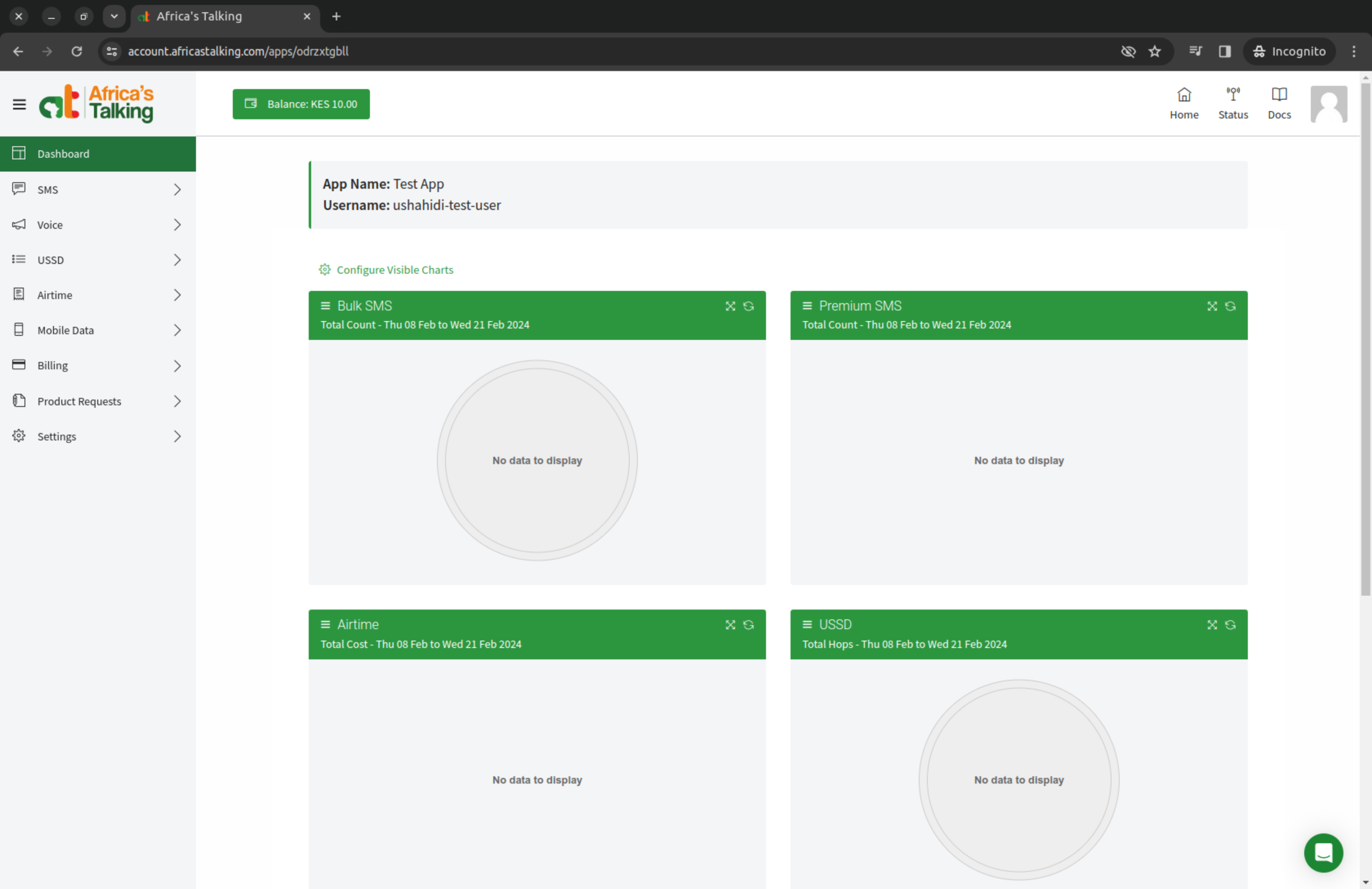
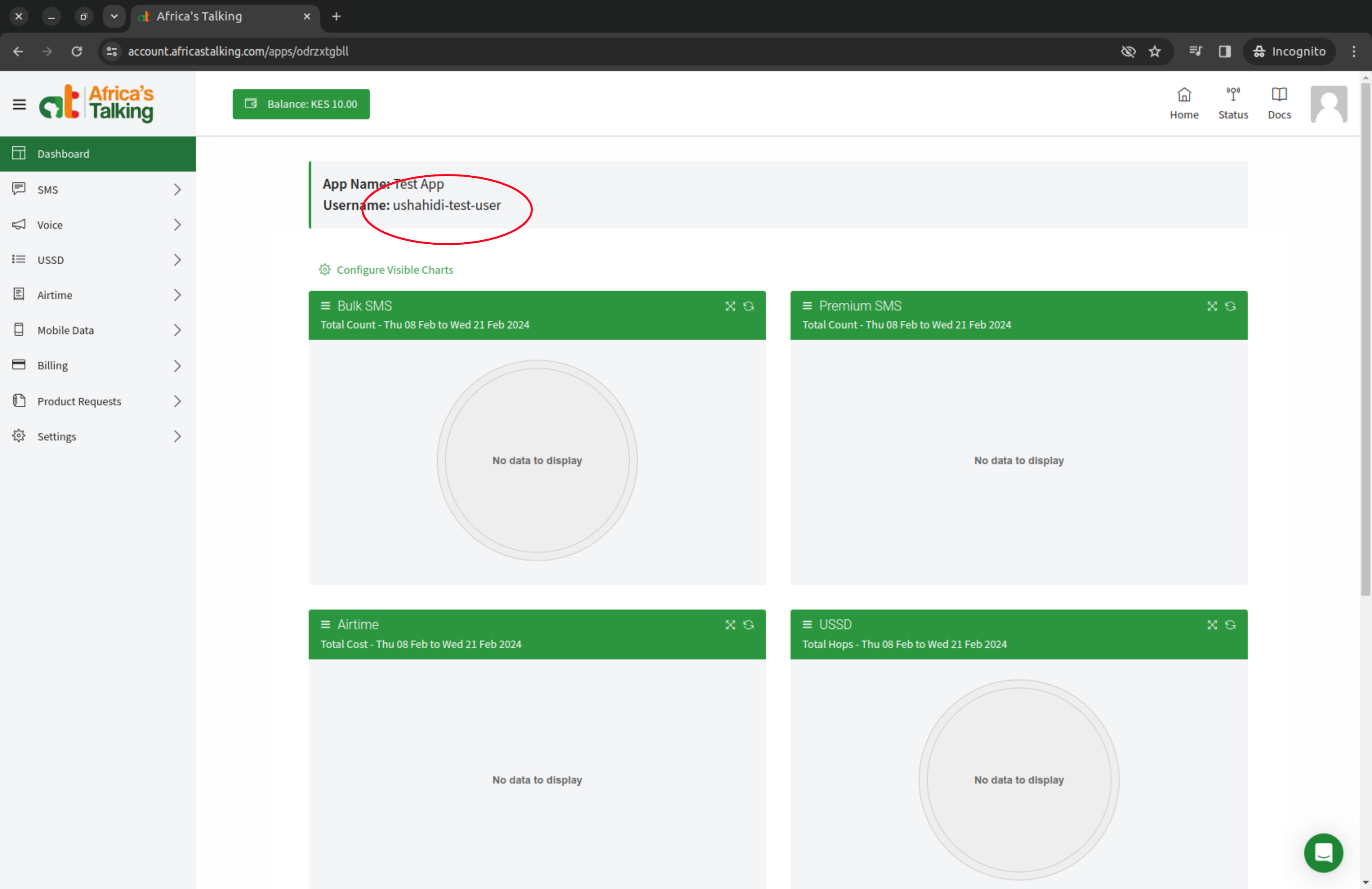
2. Click on **App name**
Take note of *Username*
3. Click on **SMS** -> **Short Codes** -> **My Shortcodes**
Take note of *Short Code*
4. Click on **Settings** -> **API Key**
5. Enter account password and click **Generate**
Take note of *API Key* (will also be automatically copied into your clipboard)
### Setup Africa's Talking Data Source in Ushahidi
1. Login to Ushahidi.
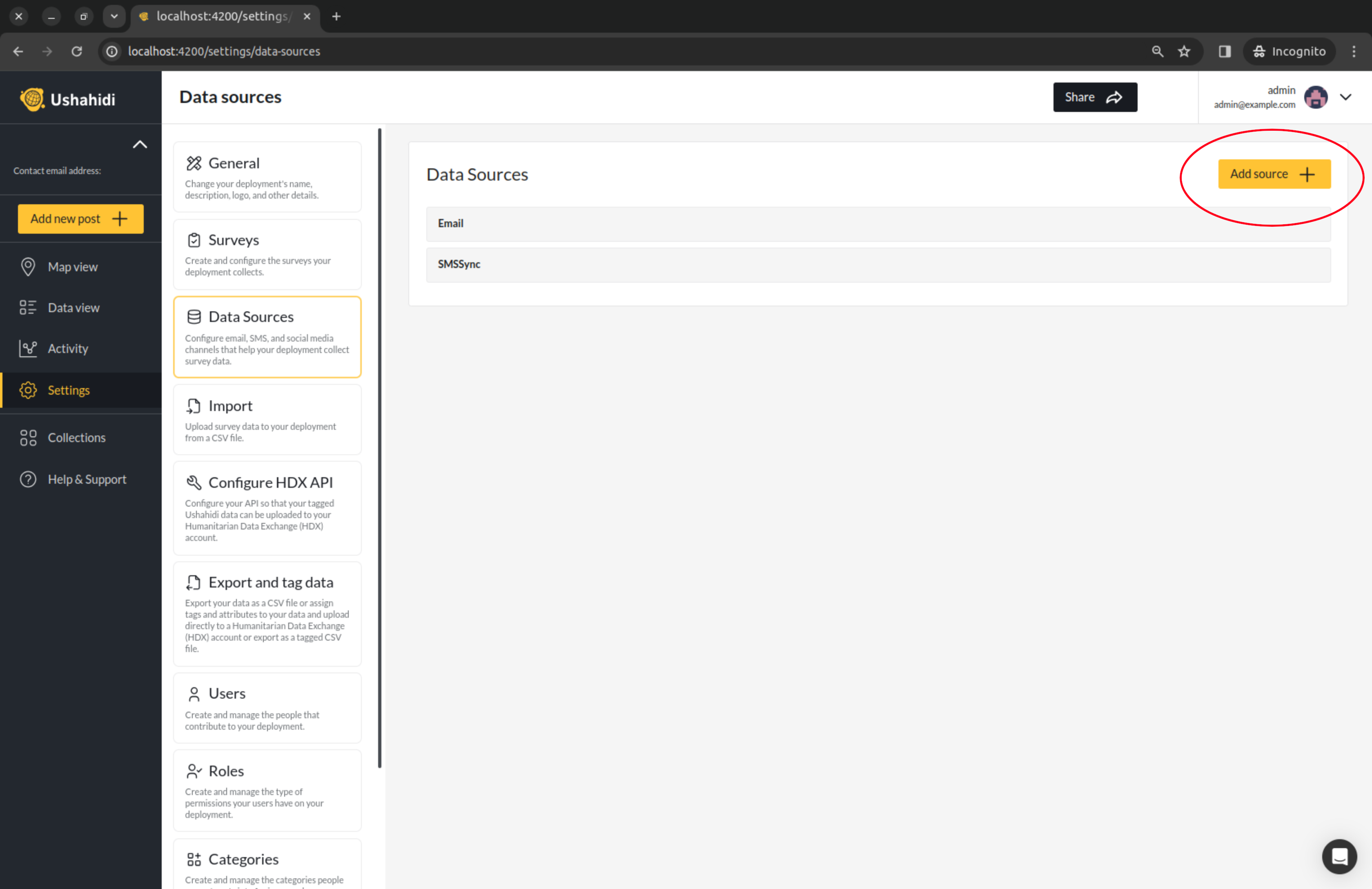
2. Click on **Settings** -> **Data Sources**
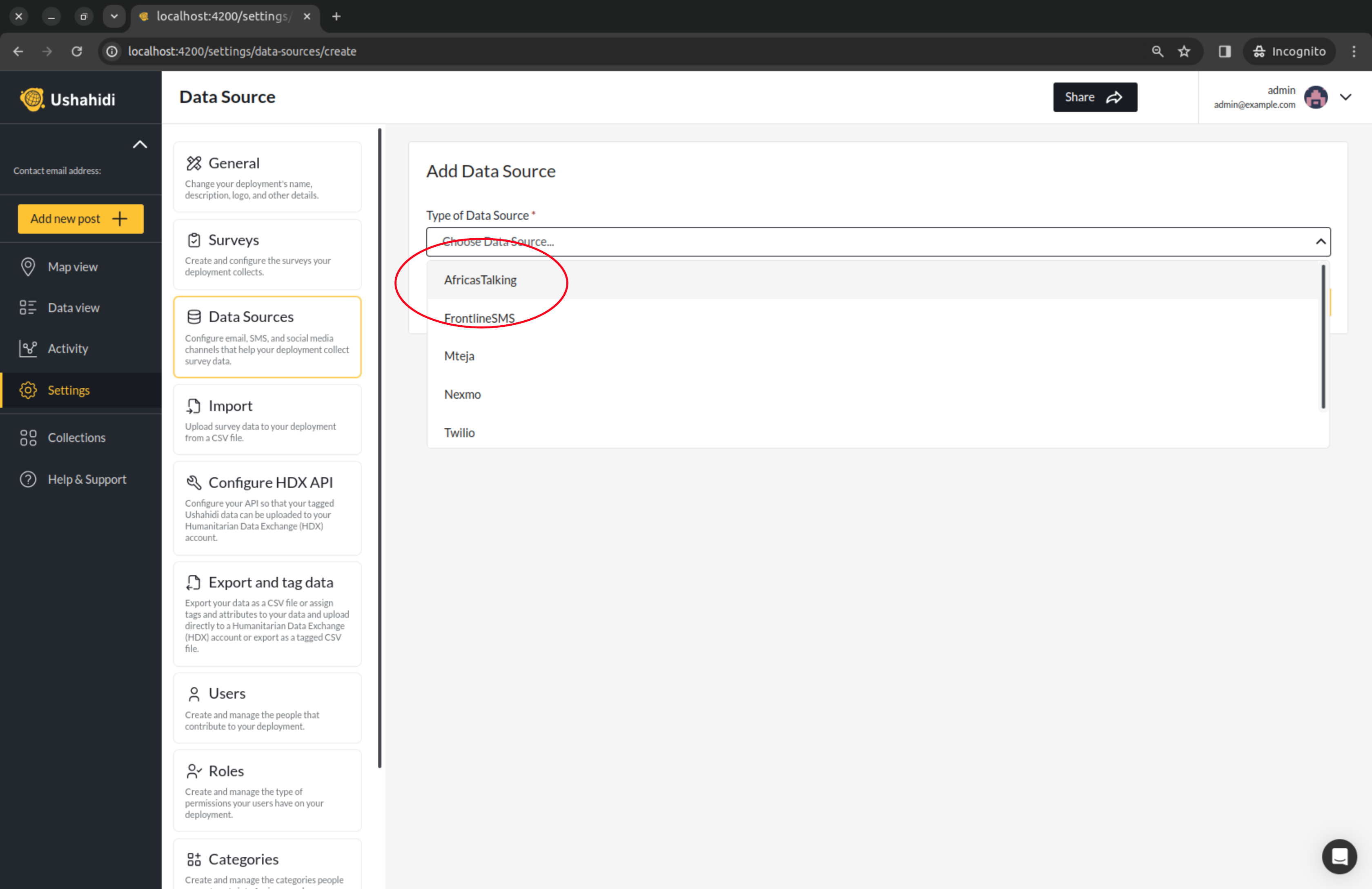
3. Click **Add source**
4. Select **Africa's Talking**
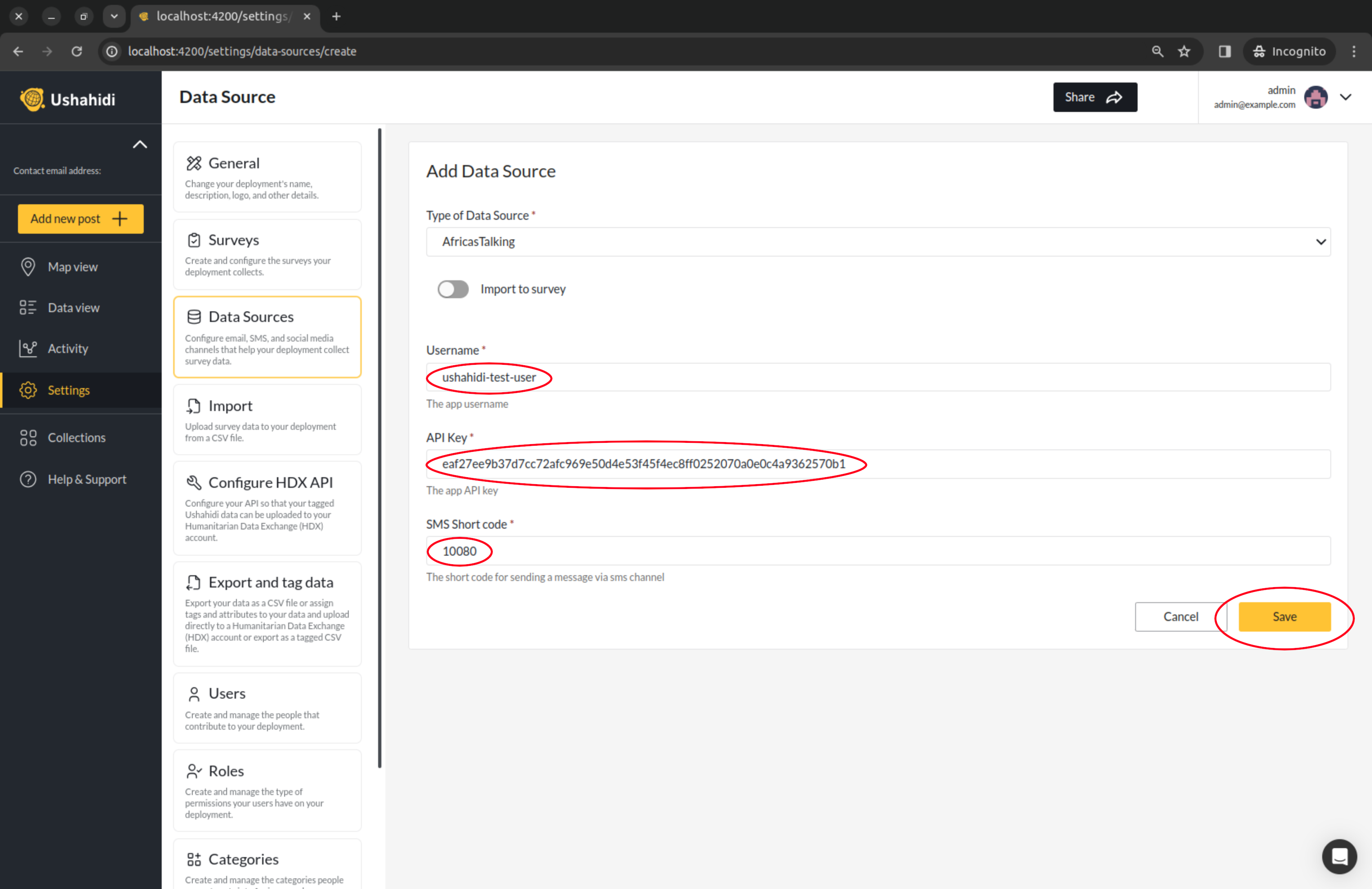
5. Enter your *Username, API Key,* and *SMS Short Code,* and then click **Save.**
### **Setup Ushahidi Callback in Africa's Talking**
1. Login to Africa's Talking Dashboard and click on app
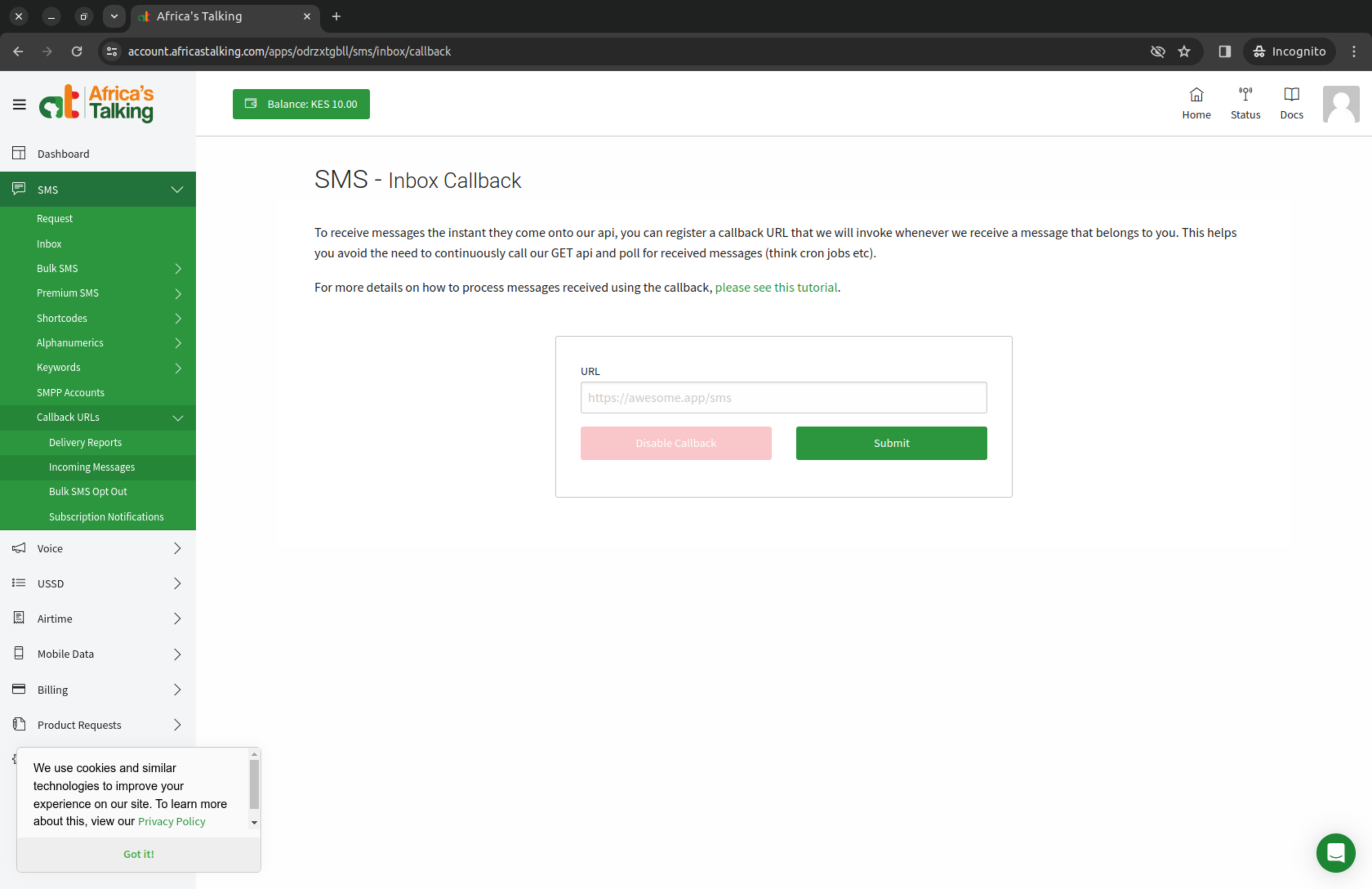
2. Click on **SMS -> Callback URLs -> Incoming Messages**
3. Enter the Ushahidi's callback URL and click **Submit.**
The URL is your deployment backend's API URL, ending with "/sms/africas-talking"
{% hint style="info" %}
The API URL is often slightly different from your deployment's website URL.
* If you are using the ushahidi.io hosting service, you will always need to insert ".api" after your subdomain. Example:
* Assuming your deployment's URL address is **My-Deployment**.ushahidi.io
* The API URL for your deployment would be: **My-Deployment****.api**.ushahidi.io
* Consult with your system administrator if you are configuring a deployment hosted outside of ushahidi.io
* Don't forget to append "/sms/africas-talking" to the resulting API URL
{% endhint %}
e.g.
 Take note of *Username*
 3. Click on **SMS** -> **Short Codes** -> **My Shortcodes**
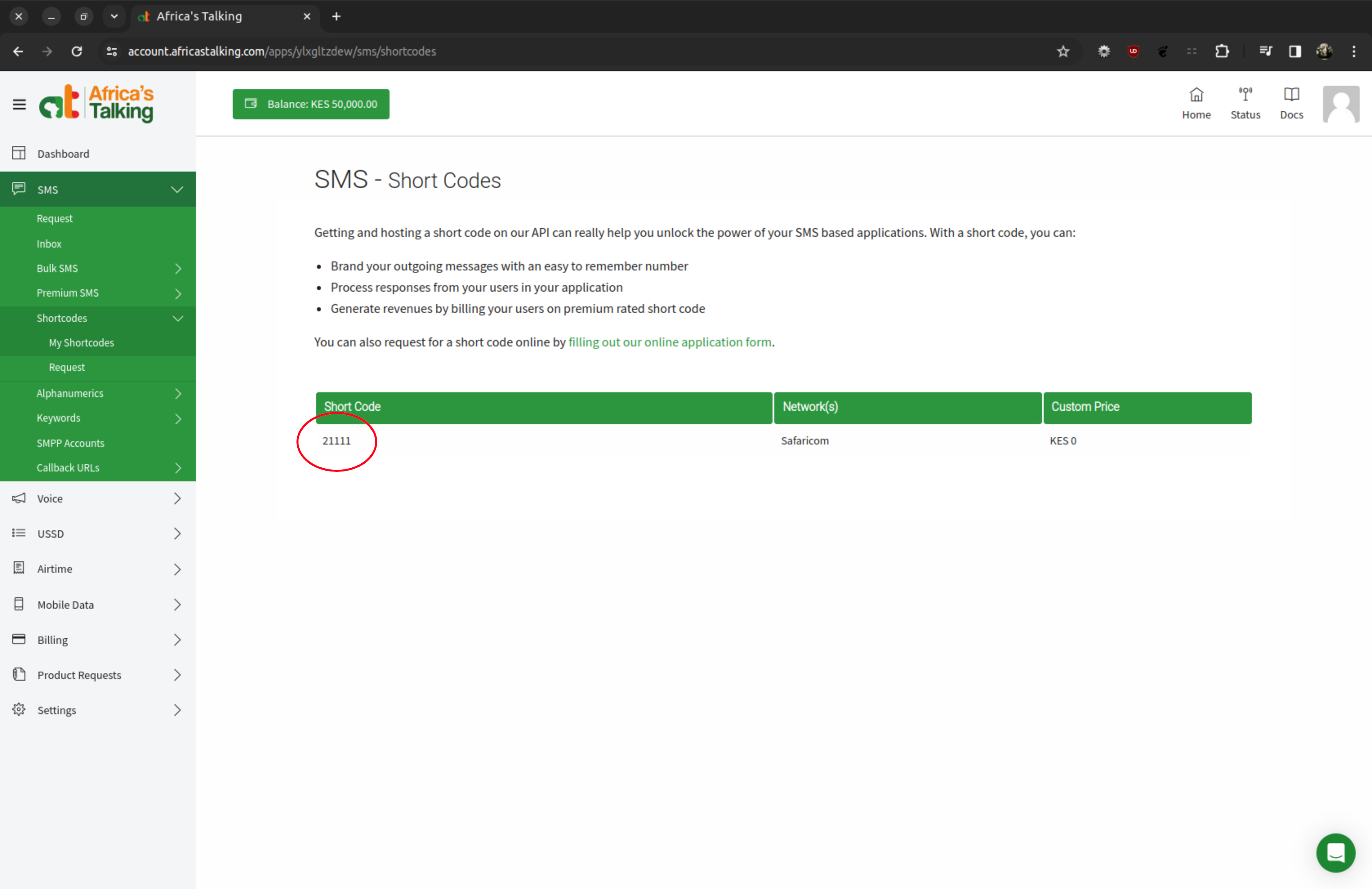 Take note of *Short Code*
4. Click on **Settings** -> **API Key**
5. Enter account password and click **Generate**
Take note of *Short Code*
4. Click on **Settings** -> **API Key**
5. Enter account password and click **Generate**
 Take note of *API Key* (will also be automatically copied into your clipboard)